Excessive Study
The Bible has been translated into over one thousand languages, and in English alone, there are around fifty different versions. While we can have extreme confidence in the translators to faithfully replicate the content, spirit, and energy of a given text, we all understand that doing so is never completely possible. We can all acknowledge this inexorable fundamental shortcoming of translation—just how much nuance is lost and how much risk for misunderstanding there is when we switch from one language to another.
Here’s a prime example of this problem with one of the most well-known verses in the Bible. According to the New International Version (NIV), the most popular translation of the Bible, Matthew 5:5 reads:
“Blessed are the meek, for they will inherit the earth.”
In other versions of the Bible, the word “meek” is replaced by “humble,” or “gentle”; these words seem to insinuate weakness, submissiveness, self deprecation, a willingness to comply and to yield, and timidity and passivity. The original Greek word however, embodies an entirely different spirit than any of these words. πραεῖς (transliterated as praus) is more accurately conveyed through the idea of a tamed wild animal that has quelled its instinctive rage, or of trained soldiers that are determined to keep their swords sheathed. This word speaks of beings that have learned to properly moderate their innate temperament to conceive a proper balance of power and reservation. This notion of praus connotes a vastly more nuanced story than “meek,” “humble,” or “gentle'' do; being dangerous, having the capacity to destroy and to create chaos, but choosing not to, is incredibly different than merely standing around passively in the face of destruction and distancing ourselves from the chaos.
And the daunting notion is that this is likely only one of thousands of questionable translations. On top of this, there is the persistent age-old controversy of Biblical canon—the study of the origins of each of the stories, the aspects of its authorship, and what can be reliably, (however they choose to define reliably) considered as part of what we call the Bible. When the hodgepodge of different sects of Christianity arbitrarily add and subtract content from the Bible to fit into its particular perspective of truth, and when there is a virtually infinite amount of linguistic interpretations of it, it can seem that the ostensibly uniform, concrete truths of the Bible are, in reality, incredibly malleable, subjective, and contextual.
Inevitably, this led us to the conclusion that we need to attempt to solidify that aforementioned malleability of meaning, to objectify the subjectivity, and to deconstruct the contexts by which the Bible evokes truth. This is where theology comes in. Theologians and apologists dedicate their lives to debate and reconcile the apparent truths of the Bible with the other seemingly apparent truths we derive from science or logical reasoning—questions surrounding evolutionary theory, how and when the universe was born, why suffering and evil exists if there’s a benevolent God, the purpose of heaven or hell, or the Bible’s stance on homosexuality or transgenderism.
The very existence of theology can seem to allude to the notion that the Bible is not the only required mode of study for the Christian. After all, we need to reconcile the two aforementioned problems of translation and compilation. So not only must one read the Bible itself, but, to understand its truth, one must also study theological texts. If we begin with the premise that the purpose of theology is to decompose the truth laid out in the Bible, then we can conclude that the truth of the Bible is in need of decomposition. This then implies that any Christian—as a matter of fact, any truth-seeker—should be compelled to study theology, a trusted field of study to demystify all the axioms and principles of the Bible that would otherwise be undermined by all its mistranslation, questionable compilation, and subjective interpretive bias. And if one might argue that theology is optional—that it is a side project or diversion of sorts—and is ultimately not required to be a Christian, they have undermined the credibility of this entire field of study, since it’s based entirely on a text that seeks to be applicable to every human being.
So if there are innumerable and unreliable translations of the Bible, if there are hundreds if not thousands of versions of Biblical canon, and if there is an infinite number of theological interpretations by which we can make sense of it, how can we even begin to speak with any degree of confidence that the interpretation we’ve chosen is the right one? How can we even begin to claim there is this one absolute truth?
Far too many of us extract these axioms and entertain the principles of the Bible as if they are apparent, undeniable, concrete truths. If you ask a devout Christian whether or not God exists, you will get a resounding yes. If you ask them if the version of the Bible they are reading is faithful to God’s design of the original text, you will get a resounding yes. If you ask them if they are sure they are living a Christian life to the best of their ability, you will get a resounding yes. To many devoted believers, anything less than a resounding yes, anything that resembles doubt and uncertainty—to say “I’m not sure,” “maybe,” “it could be”—puts into question our dedication and faith in God.
The fact of the matter is, however, that none of us know anything.
King Solomon, the author of the book of Ecclesiastes, exhorts us to remember this:
Cast your bread on the surface of the waters, for you will find it after many days. Divide your portion to seven, or even to eight, for you do not know what misfortune may occur on the earth. If the clouds are full, they pour out rain on the earth; and whether a tree falls toward the south or toward the north, wherever the tree falls, there it lies. One who watches the wind will not sow and one who looks at the clouds will not harvest. Just as you do not know the path of the wind, and how bones are formed in the womb of the pregnant woman, so you do not know the activity of God who makes everything.
— Ecclesiastes 11:1-5
In the same way that we don't know God is real with any degree of certainty nor do we possess any modicum of reliable evidence, we don't know the degree to which a particular version of the Bible is correctly translated or compiled, or if a theological argument is sound. But far too many Christians think they have to know.
We don’t have to know. We have to have faith.
Faith—that the words of the Bible we’re reading have been translated in such a way that is as close to the essence of truth as possible.
Faith—that whoever compiled the version of the Bible you’re reading is faithful to God’s word.
Faith—that your worldview and perspective of the world is one in line with God’s will.
Faith—that while the essence of truth is elusive and the reality of our existence is fraught with uncertainty, we can still live a life we’re proud to live, to write a story for ourselves that we’re proud to write.
If we decide that particular theological interpretation or a particular version of the Bible we’ve been given isn’t helping us serve ourselves and the people around us, there’s an easy solution—just use a different one; we don't have to rely on one version nor does it matter the origins of its compilation or its methods of translation. If the story we tell ourselves ceases to make us happy, we should tell ourselves a different story. Whichever version that resonates with us the most—whichever one that compels us to believe that it reflects our version of truth most closely—is the best one for us. In the end, what matters in practice is that we have faith.

Solomon ends the final chapter of Ecclesiastes by saying,
In addition to being wise, the Preacher also taught the people knowledge; and he pondered, searched out, and arranged many proverbs. The Preacher sought to find delightful words and to write words of truth correctly.
The words of the wise are like goads, and masters of these collections are like driven nails; they are given by one Shepherd. But beyond this, my son, be warned: the writing of many books is endless, and excessive study is wearying to the body.
The conclusion, when everything has been heard, is: fear God and keep His commandments, because this applies to every person. For God will bring every act to judgment, everything which is hidden, whether it is good or evil."
The reason why Solomon warns us that “excessive study is wearying to the body” is because he recognizes the danger and futility of this perpetual epistemological debate. We toil away at this confounding, elusive, needlessly abstracted and endlessly complex concept of what it means to know, when we neither can know nor need to know in the first place. In the grand scheme of things, none of all this matters. What actually draws us to these beliefs in the first place is love, is belief in values like patience, perseverance, honesty, empathy, a commitment to humanity and one another to live out our best lives. Everything in between—all the epistemological minutiae, all the semantics and logical gymnastics, all the nuances lost in translation—is a side thought, not the heart of what we're doing. If we get some parts of it wrong, then so be it. If there’s anything that God has called us to do, and if there’s anything the Bible is about, it isn’t about being pedantic and devoting your life to the hapless pursuit of an absolute truth. Because none of us truly know anything.
Unconditional Love
Love can only make sense contextually. When there are seemingly infinite ways that it’s represented, we consign love—one of the fundamental aspects of what it means to be human—to a delicate game of presentation and interpretation. We do not accept love fairly, nor as it is. We do not give away love fairly, nor as it is. We perform all manner of mental calculus to determine what type of love we give out, what type of love we receive, if someone is worthy of our love, and if someone is capable of loving us back.
What is the premise of our relationship with this person? A stranger? An acquaintance? A classmate? A coworker? A teacher? A family member? A friend of a friend? A potential romantic partner? What kind of person do they seem like? How do they dress? How do they carry themselves? Am I proud or ashamed to be around this person? How much time do we spend with this person? How often do we spend time? How do we spend that time? What do we have to gain from this other person? How do they make us feel? What form of love do we express? Do we love with emotional distance and reverence? Or do we love with intimacy and connection? What constitutes the nature of these interactions? A sporadic text exchange every three months? Playful joking and lively conversations? The silent comfort of one another’s presence?
Burdened by the weight of circumstances, tainted by subconscious desire, and perverted by conscious rationalization, it can seem as if our love for one another is selfishly selective, lined with ulterior motives, and temperamental—far from anything we might define as unconditional.
In some way it is discouraging, but perhaps we just have to recognize that our yearning for a pure, unconditional love is all a delusion. Perhaps this kind of love is reserved for the divine and the incomprehensible. Perhaps, as mere humans, we cannot even begin to fully comprehend a concept of love in a vacuum, of a completely pure love unchained by the sins of human consciousness, of a love infinitely. After all, if we could momentarily perceive just a modicum of the profundity of Jesus’ love for humanity—if all at once, we caught a glimpse of all the sacrifice and emotional burden, all the tears shed and every palpitation of the heart, every agonizing moment when he perished on the cross, the boundless thoughtfulness and concern for each and every one of us—I’m fully convinced there would not be a single nonbeliever on Earth thereafter.
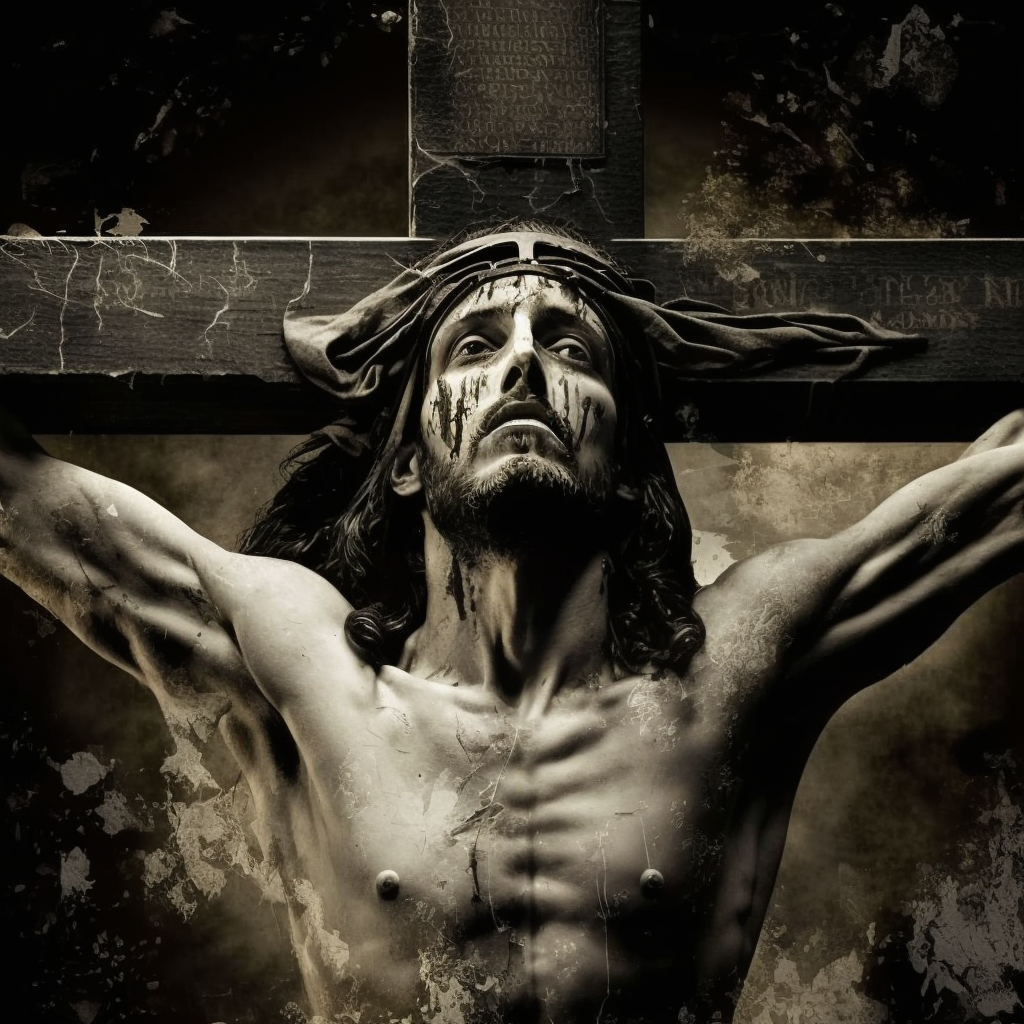
But if humanity was touched by such a divine truth, truly converted by the potency of an irrefutable unconditional love, the entire narrative begins to fall apart. There would be no more stories to tell. There would exist no such impetus for us to discover, to learn, to understand, and to overcome if we already were given the answer. Indeed, love may only make sense contextually, but, perhaps, that is the point of it all. Perhaps the essence of human love is constituted by—not abstracted from—the social dynamics that surround the expression and interpretation of it. The very notion of love between human beings is fundamentally about an internalization of our shared journeys; it is about each and every step along the way, the context by which we can familiarize ourselves with one another by disentangling the mystery of human identity—the webs of our foibles and idiosyncrasies, the abyssal caverns of our past trauma and present fear, the vast, seemingly limitless expanse of our hopes and dreams, and the confounding space of everything in between. We can only love or be loved if we have a story to tell—if we can recall those moments, in spite of the fleeting nature and whim of our circumstances, of lamentation and celebration, of ambivalence and determination, of regret and reminiscence, of unity and discordance, of indignation and justice, of shame and confidence, of anger and forgiveness, of conflict and resolution, of frustration and catharsis, of life and death.
Unlike Jesus, we do not have infinite time and energy; our commitment to one another is finite and thus our capacity to form the deep emotional attachment to engender true love is finite. Yet some still attempt to emulate this unconditional love. While I wouldn’t necessarily define it as a futile endeavor, because it can bring about positive change in the world, I would assert that it’s a grave misjudgment of our capabilities as human beings. No one can claim to love literally everyone and everything equally, with just the right amount of thought, consideration, concern, and degree of interaction to constitute a perfect relationship between two entities. It’s simply not in congruence with how our brains are wired and certainly unfeasible while fighting the perpetual uphill battle against time, space, and ourselves. We have to recognize that divine love and human love are completely disparate concepts, and that there’s nothing wrong with this distinction.
This is not to say that there is no value in the belief in a divine form of love; in fact, quite the opposite. It seems to me that those more inclined to apply this concept of unconditional love to strangers already have an implicit understanding of this compulsion to write stories; it’s not that there is already a story before interaction, but they are able to connect and extend the stories of a perfect divine love or of those shared with existing friends or family, conjoining the elements of these stories with the desire to create new stories. And this desire is not insignificant; it has proven itself to be one of the most powerful forces of change in our world. Despite the compelling nature of these stories, we have to remember that extending the story of love does not mean that it replicates it, and that it might look nothing like we idealize it to be in our minds.
We must avoid the trap of confusing the intimate love we share with our loved ones with the kind of blind compassion, generosity, or admiration one would share with strangers, and covering it with the blanket term of unconditional love, when it isn’t in any way. It could be that we could extricate the conditions and the context from love to produce something we might define as unconditional love, but this version of love is so far-fetched from our standard mode of fostering intimacy and affection with our close friends or family. Perhaps, due to the constraints of the human psyche, to extend this kind of intimate love unconditionally, in a manner that defiantly supersedes context and narrative, is nearly impossible to do with consistency and universality, so much so that we might avoid assigning it at all to any form of human action.
It may be that all that is left for us to do is present and interpret. It may be that the only way we can inch ever closer to this concept of unconditional love is to practice conditional love—to hone our ability to discern context, circumstance, need, and desire imbued in the acts of love we give and receive. In the end—for everyone that will be a part of our lives, for all the reasons that brought us together in this very time and place, for all that we seek to derive from this fateful existence—these will be the stories that we write, and the journeys that we will take.
For there is no story without conditions,
no journey worth taking without a story,
and no love without a journey.