A Time for Everything
There is a time for everything,
and a season for every activity under the heavens:
a time to be born and a time to die,
a time to plant and a time to uproot,
a time to kill and a time to heal,
a time to tear down and a time to build,
a time to weep and a time to laugh,
a time to mourn and a time to dance,
a time to scatter stones and a time to gather them,
a time to embrace and a time to refrain from embracing,
a time to search and a time to give up,
a time to keep and a time to throw away,
a time to tear and a time to mend,
a time to be silent and a time to speak,
a time to love and a time to hate,
a time for war and a time for peace.
— Ecclesiastes 3:1-8
If there is a time for everything, how do we know that what we’re doing now is the right time to do it?
Most read this passage with a sense of reassurance, affirming their belief that they’ve chosen the ostensibly right thing to do, and that things will go into their favor because of their unwavering faith in God or an overarching optimism.
Conversely, others read this passage with a deep fear that the actions that they’ve chosen to take and the desires of their heart are untimely; they carry an unabating apprehension that they are haplessly misaligned with the course of the universe or with the framework of God’s plan.
Time and time again, we prove over and over—whether in the minute facets of everyday life or the more significant events over the course of human history—that we are incapable of accurately predicting outcomes and determining the right course of action towards complex problems.
We will never know the right time.
But the best we can do is pretend we know.
Because perhaps the ultimate fear of humanity is that there is no right or wrong. Perhaps this harrowing notion that we are infinitesimally insignificant specks of dust, suspended amidst an indifferent universe—without a narrative, without a story, without form nor function, without purpose nor agency, without reason nor rhyme—is far too much to bear.

In our conceptions of a godless world and a godlike world alike, we are powerless. We cannot even begin to fathom the true nature of existence. We are all wrong when we read this passage and contemplate the notion of a right time or a wrong time. But, as humans, it seems as though we would much rather be wrong. We entertain ourselves by chasing these elusive definitions of right and wrong to beguile ourselves into believing that we are in control, that we—against all odds, fraught with uncertainty and imperfection, cursed by the defects and faults of our design—can bring shape to a shapeless world. Even if it means destroying ourselves in the process, we can, at the very least, be proud that we did something.
Regret
If we could’ve done things differently, then why didn’t we?
In one question, this is the fundamental problem of regret. Regret is the manifestation of our implicit belief in the concept of free will. It can only exist if we delude ourselves into believing that we can somehow alter the course of the universe and the incomprehensible spontaneity of our circumstances; our minds insist that somehow we can, in the fleeting moment of making a mistake, whimsically change our train of thought and our course of action, as if touched by a muse.
Many people regret not spending enough time with their loved ones before they passed away, devoting excessive time and energy to work and forgetting what actually matters in their lives, committing themselves to a relationship with the wrong type of person, or choosing the wrong career path. But life is complex, and the torrent of circumstances that barrage our lives is unfathomable. Life is far from being black and white, far from being the straightforward cause-and-effect that we’d like it to be.
“I again saw under the sun that the race is not to the swift and the battle is not to the warriors, and neither is bread to the wise nor wealth to the discerning, nor favor to the skillful; for time and chance overtake them all.”
— Ecclesiastes 9:11
It is impossible to know what would’ve happened if you made the “right” decision instead of the “wrong” one in a given instance of regret. Just because we made a “good” decision doesn’t guarantee any “good” outcome. Our definitions of “right,” “wrong,” “good,” or “bad” are nonsensical in this context because we cannot even begin to fathom the potential butterfly effect it may precipitate—the cascading consequences of our decisions within these alternate universes. So if the past is past, and there’s nothing we can do to change it, why do we have such a powerful inclination to ruminate upon it, deluding ourselves in the process?

Because in the end, it’s not about the event. It’s not about changing the past or thinking that things really might’ve turned out better. The act of regret is fundamentally about the person you choose to be. Our brains use regret as a psychological tool to derive insight from retrospect. We trick ourselves into this futile strife against the seemingly inalterable course of the universe because, for many of us, it has the power to convert the emotional energy of embarrassment, shame, anger, or frustration into a compelling and unwavering desire to make our circumstances just a little more favorable for us in this inhospitable world. It is to learn from trial and tribulation, from trauma and from tragedy, to cherish the loved ones in our lives while they’re still around, to ask ourselves the important questions of life before the luxuries of time and energy expire, to be mindful of the people we choose to walk alongside and the decisions that we make.
Choose to live a life with regret, or choose to live life without it. In the grand scheme of things, I would argue that it doesn’t matter. The necessity of this emotional rumination ultimately depends on the individual, and it will come intuitively to you. What does matter is that we learn from our mistakes. What matters is that we can look back upon the past with the momentum of forward motion, as a means to propel ourselves forward in this world, day by day becoming more of a person we can be proud to be. But the act of rumination in the absence of forward motion—as a means of self-pity, as a meaningless diversion from the work we need to do, as an excuse to hide or to give up—is nothing but another trap and another pitfall that too many of us fall into.
Excessive Study
The Bible has been translated into over one thousand languages, and in English alone, there are around fifty different versions. While we can have extreme confidence in the translators to faithfully replicate the content, spirit, and energy of a given text, we all understand that doing so is never completely possible. We can all acknowledge this inexorable fundamental shortcoming of translation—just how much nuance is lost and how much risk for misunderstanding there is when we switch from one language to another.
Here’s a prime example of this problem with one of the most well-known verses in the Bible. According to the New International Version (NIV), the most popular translation of the Bible, Matthew 5:5 reads:
“Blessed are the meek, for they will inherit the earth.”
In other versions of the Bible, the word “meek” is replaced by “humble,” or “gentle”; these words seem to insinuate weakness, submissiveness, self deprecation, a willingness to comply and to yield, and timidity and passivity. The original Greek word however, embodies an entirely different spirit than any of these words. πραεῖς (transliterated as praus) is more accurately conveyed through the idea of a tamed wild animal that has quelled its instinctive rage, or of trained soldiers that are determined to keep their swords sheathed. This word speaks of beings that have learned to properly moderate their innate temperament to conceive a proper balance of power and reservation. This notion of praus connotes a vastly more nuanced story than “meek,” “humble,” or “gentle'' do; being dangerous, having the capacity to destroy and to create chaos, but choosing not to, is incredibly different than merely standing around passively in the face of destruction and distancing ourselves from the chaos.
And the daunting notion is that this is likely only one of thousands of questionable translations. On top of this, there is the persistent age-old controversy of Biblical canon—the study of the origins of each of the stories, the aspects of its authorship, and what can be reliably, (however they choose to define reliably) considered as part of what we call the Bible. When the hodgepodge of different sects of Christianity arbitrarily add and subtract content from the Bible to fit into its particular perspective of truth, and when there is a virtually infinite amount of linguistic interpretations of it, it can seem that the ostensibly uniform, concrete truths of the Bible are, in reality, incredibly malleable, subjective, and contextual.
Inevitably, this led us to the conclusion that we need to attempt to solidify that aforementioned malleability of meaning, to objectify the subjectivity, and to deconstruct the contexts by which the Bible evokes truth. This is where theology comes in. Theologians and apologists dedicate their lives to debate and reconcile the apparent truths of the Bible with the other seemingly apparent truths we derive from science or logical reasoning—questions surrounding evolutionary theory, how and when the universe was born, why suffering and evil exists if there’s a benevolent God, the purpose of heaven or hell, or the Bible’s stance on homosexuality or transgenderism.
The very existence of theology can seem to allude to the notion that the Bible is not the only required mode of study for the Christian. After all, we need to reconcile the two aforementioned problems of translation and compilation. So not only must one read the Bible itself, but, to understand its truth, one must also study theological texts. If we begin with the premise that the purpose of theology is to decompose the truth laid out in the Bible, then we can conclude that the truth of the Bible is in need of decomposition. This then implies that any Christian—as a matter of fact, any truth-seeker—should be compelled to study theology, a trusted field of study to demystify all the axioms and principles of the Bible that would otherwise be undermined by all its mistranslation, questionable compilation, and subjective interpretive bias. And if one might argue that theology is optional—that it is a side project or diversion of sorts—and is ultimately not required to be a Christian, they have undermined the credibility of this entire field of study, since it’s based entirely on a text that seeks to be applicable to every human being.
So if there are innumerable and unreliable translations of the Bible, if there are hundreds if not thousands of versions of Biblical canon, and if there is an infinite number of theological interpretations by which we can make sense of it, how can we even begin to speak with any degree of confidence that the interpretation we’ve chosen is the right one? How can we even begin to claim there is this one absolute truth?
Far too many of us extract these axioms and entertain the principles of the Bible as if they are apparent, undeniable, concrete truths. If you ask a devout Christian whether or not God exists, you will get a resounding yes. If you ask them if the version of the Bible they are reading is faithful to God’s design of the original text, you will get a resounding yes. If you ask them if they are sure they are living a Christian life to the best of their ability, you will get a resounding yes. To many devoted believers, anything less than a resounding yes, anything that resembles doubt and uncertainty—to say “I’m not sure,” “maybe,” “it could be”—puts into question our dedication and faith in God.
The fact of the matter is, however, that none of us know anything.
King Solomon, the author of the book of Ecclesiastes, exhorts us to remember this:
Cast your bread on the surface of the waters, for you will find it after many days. Divide your portion to seven, or even to eight, for you do not know what misfortune may occur on the earth. If the clouds are full, they pour out rain on the earth; and whether a tree falls toward the south or toward the north, wherever the tree falls, there it lies. One who watches the wind will not sow and one who looks at the clouds will not harvest. Just as you do not know the path of the wind, and how bones are formed in the womb of the pregnant woman, so you do not know the activity of God who makes everything.
— Ecclesiastes 11:1-5
In the same way that we don't know God is real with any degree of certainty nor do we possess any modicum of reliable evidence, we don't know the degree to which a particular version of the Bible is correctly translated or compiled, or if a theological argument is sound. But far too many Christians think they have to know.
We don’t have to know. We have to have faith.
Faith—that the words of the Bible we’re reading have been translated in such a way that is as close to the essence of truth as possible.
Faith—that whoever compiled the version of the Bible you’re reading is faithful to God’s word.
Faith—that your worldview and perspective of the world is one in line with God’s will.
Faith—that while the essence of truth is elusive and the reality of our existence is fraught with uncertainty, we can still live a life we’re proud to live, to write a story for ourselves that we’re proud to write.
If we decide that particular theological interpretation or a particular version of the Bible we’ve been given isn’t helping us serve ourselves and the people around us, there’s an easy solution—just use a different one; we don't have to rely on one version nor does it matter the origins of its compilation or its methods of translation. If the story we tell ourselves ceases to make us happy, we should tell ourselves a different story. Whichever version that resonates with us the most—whichever one that compels us to believe that it reflects our version of truth most closely—is the best one for us. In the end, what matters in practice is that we have faith.

Solomon ends the final chapter of Ecclesiastes by saying,
In addition to being wise, the Preacher also taught the people knowledge; and he pondered, searched out, and arranged many proverbs. The Preacher sought to find delightful words and to write words of truth correctly.
The words of the wise are like goads, and masters of these collections are like driven nails; they are given by one Shepherd. But beyond this, my son, be warned: the writing of many books is endless, and excessive study is wearying to the body.
The conclusion, when everything has been heard, is: fear God and keep His commandments, because this applies to every person. For God will bring every act to judgment, everything which is hidden, whether it is good or evil."
The reason why Solomon warns us that “excessive study is wearying to the body” is because he recognizes the danger and futility of this perpetual epistemological debate. We toil away at this confounding, elusive, needlessly abstracted and endlessly complex concept of what it means to know, when we neither can know nor need to know in the first place. In the grand scheme of things, none of all this matters. What actually draws us to these beliefs in the first place is love, is belief in values like patience, perseverance, honesty, empathy, a commitment to humanity and one another to live out our best lives. Everything in between—all the epistemological minutiae, all the semantics and logical gymnastics, all the nuances lost in translation—is a side thought, not the heart of what we're doing. If we get some parts of it wrong, then so be it. If there’s anything that God has called us to do, and if there’s anything the Bible is about, it isn’t about being pedantic and devoting your life to the hapless pursuit of an absolute truth. Because none of us truly know anything.
Unconditional Love
Love can only make sense contextually. When there are seemingly infinite ways that it’s represented, we consign love—one of the fundamental aspects of what it means to be human—to a delicate game of presentation and interpretation. We do not accept love fairly, nor as it is. We do not give away love fairly, nor as it is. We perform all manner of mental calculus to determine what type of love we give out, what type of love we receive, if someone is worthy of our love, and if someone is capable of loving us back.
What is the premise of our relationship with this person? A stranger? An acquaintance? A classmate? A coworker? A teacher? A family member? A friend of a friend? A potential romantic partner? What kind of person do they seem like? How do they dress? How do they carry themselves? Am I proud or ashamed to be around this person? How much time do we spend with this person? How often do we spend time? How do we spend that time? What do we have to gain from this other person? How do they make us feel? What form of love do we express? Do we love with emotional distance and reverence? Or do we love with intimacy and connection? What constitutes the nature of these interactions? A sporadic text exchange every three months? Playful joking and lively conversations? The silent comfort of one another’s presence?
Burdened by the weight of circumstances, tainted by subconscious desire, and perverted by conscious rationalization, it can seem as if our love for one another is selfishly selective, lined with ulterior motives, and temperamental—far from anything we might define as unconditional.
In some way it is discouraging, but perhaps we just have to recognize that our yearning for a pure, unconditional love is all a delusion. Perhaps this kind of love is reserved for the divine and the incomprehensible. Perhaps, as mere humans, we cannot even begin to fully comprehend a concept of love in a vacuum, of a completely pure love unchained by the sins of human consciousness, of a love infinitely. After all, if we could momentarily perceive just a modicum of the profundity of Jesus’ love for humanity—if all at once, we caught a glimpse of all the sacrifice and emotional burden, all the tears shed and every palpitation of the heart, every agonizing moment when he perished on the cross, the boundless thoughtfulness and concern for each and every one of us—I’m fully convinced there would not be a single nonbeliever on Earth thereafter.
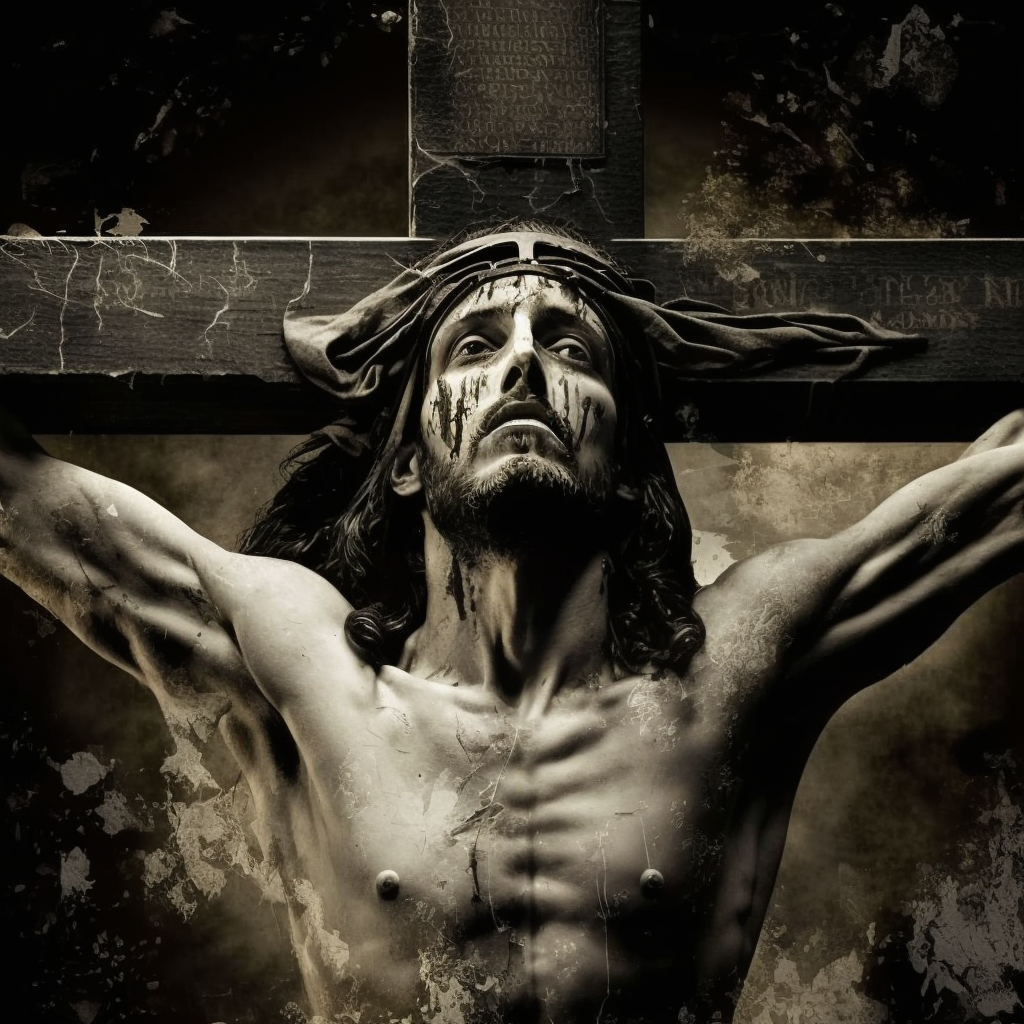
But if humanity was touched by such a divine truth, truly converted by the potency of an irrefutable unconditional love, the entire narrative begins to fall apart. There would be no more stories to tell. There would exist no such impetus for us to discover, to learn, to understand, and to overcome if we already were given the answer. Indeed, love may only make sense contextually, but, perhaps, that is the point of it all. Perhaps the essence of human love is constituted by—not abstracted from—the social dynamics that surround the expression and interpretation of it. The very notion of love between human beings is fundamentally about an internalization of our shared journeys; it is about each and every step along the way, the context by which we can familiarize ourselves with one another by disentangling the mystery of human identity—the webs of our foibles and idiosyncrasies, the abyssal caverns of our past trauma and present fear, the vast, seemingly limitless expanse of our hopes and dreams, and the confounding space of everything in between. We can only love or be loved if we have a story to tell—if we can recall those moments, in spite of the fleeting nature and whim of our circumstances, of lamentation and celebration, of ambivalence and determination, of regret and reminiscence, of unity and discordance, of indignation and justice, of shame and confidence, of anger and forgiveness, of conflict and resolution, of frustration and catharsis, of life and death.
Unlike Jesus, we do not have infinite time and energy; our commitment to one another is finite and thus our capacity to form the deep emotional attachment to engender true love is finite. Yet some still attempt to emulate this unconditional love. While I wouldn’t necessarily define it as a futile endeavor, because it can bring about positive change in the world, I would assert that it’s a grave misjudgment of our capabilities as human beings. No one can claim to love literally everyone and everything equally, with just the right amount of thought, consideration, concern, and degree of interaction to constitute a perfect relationship between two entities. It’s simply not in congruence with how our brains are wired and certainly unfeasible while fighting the perpetual uphill battle against time, space, and ourselves. We have to recognize that divine love and human love are completely disparate concepts, and that there’s nothing wrong with this distinction.
This is not to say that there is no value in the belief in a divine form of love; in fact, quite the opposite. It seems to me that those more inclined to apply this concept of unconditional love to strangers already have an implicit understanding of this compulsion to write stories; it’s not that there is already a story before interaction, but they are able to connect and extend the stories of a perfect divine love or of those shared with existing friends or family, conjoining the elements of these stories with the desire to create new stories. And this desire is not insignificant; it has proven itself to be one of the most powerful forces of change in our world. Despite the compelling nature of these stories, we have to remember that extending the story of love does not mean that it replicates it, and that it might look nothing like we idealize it to be in our minds.
We must avoid the trap of confusing the intimate love we share with our loved ones with the kind of blind compassion, generosity, or admiration one would share with strangers, and covering it with the blanket term of unconditional love, when it isn’t in any way. It could be that we could extricate the conditions and the context from love to produce something we might define as unconditional love, but this version of love is so far-fetched from our standard mode of fostering intimacy and affection with our close friends or family. Perhaps, due to the constraints of the human psyche, to extend this kind of intimate love unconditionally, in a manner that defiantly supersedes context and narrative, is nearly impossible to do with consistency and universality, so much so that we might avoid assigning it at all to any form of human action.
It may be that all that is left for us to do is present and interpret. It may be that the only way we can inch ever closer to this concept of unconditional love is to practice conditional love—to hone our ability to discern context, circumstance, need, and desire imbued in the acts of love we give and receive. In the end—for everyone that will be a part of our lives, for all the reasons that brought us together in this very time and place, for all that we seek to derive from this fateful existence—these will be the stories that we write, and the journeys that we will take.
For there is no story without conditions,
no journey worth taking without a story,
and no love without a journey.
The Fragility of the Church
I have absolutely no sympathy for the churches that have lost a significant chunk of their previous attendance or have fallen apart completely the past several years because of the pandemic.
Why should I? When for themselves they have wrought destruction by creating an unhealthy dependence on the church as an institution?
When for decades upon decades they have fostered a malignant growth of complacency? When every day that passes, we delude ourselves into believing that things are okay? When instead of taking upon it ourselves to bring upon radical change, we’re fine with everything being a perpetual “work in progress”? When we’re fine with the fact that church has become an isolated bubble, where the reality of life outside rarely pierces through undistorted?
When words like “fellowship,” “family,” “brothers and sisters in Christ,” and “the body of Christ” are thrown around meaninglessly while countless individuals—those that once toiled to find meaning and purpose—have long given up on their faith and already left the cold embrace of church?
When they have bastardized the very concept of love?
Love is never used lightly in the Bible. It recalls moments of absolute despair, an unfathomable suffering, of death and of life, exemplified by Jesus, who endured an unending sacrifice and a harrowing, cruel death none of us would even contemplate inflicting even on our enemies. Yet we throw this term around as if we have a modicum of this kind of love, when we can’t even talk to each other and have a genuine conversation—to supersede anything beyond the status of acquaintance. When we’re supposed to demonstrate this archetype of unconditional love to the rest of the world, it’s simultaneously incredibly easy to find communities outside of church that surpass it in group cohesiveness, individual involvement, and commitment towards its members.
Why is this? It’s because we live and breathe by our social norms; most of us understand that people are defined by the predominant culture and circumstances of their upbringing. But we also know that the characteristics of this culture do not align with those laid out in the Bible. Yet we don’t renounce it, and we don’t fight ourselves enough to fundamentally change ourselves in any meaningful way. And so it subverts our ability to form genuine friendships with others as Christians. When we try to push Christian ideals and the Bible’s teachings onto others’ beliefs, the stark reality of discomfort—the societal norms that have taught us not to invade people’s personal space and project our definitions of right and wrong—creates an internal dissension.
Thus the struggle of the contemporary Christian is not a question of life or death, not a fight for freedom against persecution, not the toil against hunger or thirst, not a spiritual battle for heaven against hell. It is instead a vapid battle against a looming nihilistic belief that none of us even matter, against social norms and established conventions, against ourselves and one another in a inconsequential mental battle towards finding any meaning whatsoever in our daily lives. It is a battle in mustering the willpower to have faith in connecting the sparse dots of lessons learned from a text written millennia ago and somehow amalgamating them into a coherent message that we dare relate to the bleak reality of modern life. The greatest tragedy of Christianity in the 21st century is the failure of the institutionalized church to adequately confront this existential conundrum.

This is about a cultural obsession with order, obedience, comfort, and convention in a context where we simultaneously uphold a figure that was not remotely characteristic of any of these things whatsoever. Lest we forget that Jesus came here not to bring peace, but to bring a sword. His life was literally about waging war with every established convention and social norm so much so that it got him crucified. Where is that same spirit? Why is it that saying something controversial—in the pursuit of truth and progress—grants nothing but social ridicule? Why is it, like we once did to Jesus, that we alienate and ostracize those that try to challenge our established beliefs?
There’s little evidence in the Bible that necessitates an orderly Sunday service, elders that define and make the decisions for other people, and conformity to established conventions imported from our societal context. But instead, there’s an overwhelming amount of evidence of a kind of love that is not even remotely achieved in our current conception of church. The more we dig, the more we realize that our church culture barely resembles anything representative of Jesus’ teachings.
Despite this seemingly unshakeable, obstinate adherence towards this model of the church as an institution, because of the pandemic we were finally forced to change. Maintaining commitment towards this institution—now without the obligation to physically attend—became untenable. Without the self-affirming routine of attending Sunday worship and service alongside friends and family, many unsurprisingly drifted away from the church, and thus, a meaningful Christian life as a whole. Most simply didn’t know how to live out this Christian life outside the archetypal church context. The pandemic is a demonstration of both the fragility of the institutionalized church and the fragility of the Christian who is dependent on such a system; they irrevocably fail to survive when the status quo—the aforementioned cultural obsession with order, obedience, comfort, and convention—finally falls apart.
Jon Ngan asserts that the recent pandemic should teach us that instead of haplessly urging everyone to come back to church and to return to the status quo, we should sustain each other as individuals to become the church ourselves. It is the notion that perhaps the church was never designed to be an institution in the first place, such that when catastrophic events seek to fragment and disperse us, Christians can still persist unperturbed. We can be well-equipped to live out our calling in society—where our work matters and where we spend most of our time. So instead of this strange vacillation between societal and biblical norms that is so characteristic of most interactions between Christians, learning to interpret ourselves as the church can integrate our beliefs into a meaningful practice.
We can learn to dispose of our preconceptions about the Christian life and dismantle the idea that our calling is confined to the walls of a building.
We can learn to approach people with empathy—not with a narrative.
We can learn to understand the nuance in the progress of an individual—not assume that they are broken and in need of fixing.
We can learn to finally and truly love, as Jesus would have. We can learn that it’s not about isolating ourselves in exclusive communities, but it’s about walking together—both as individuals and as his creation—united in a communal journey to find meaning and purpose.
If there’s anything the Bible says, it’s that while it may be our human tendency to perpetuate the mistakes of the past—our failure to understand each other as one and the same, our tendency to focus on selfish, short-term gain, our proclivity to succumb to our impulses, our persistent desire to return to the status quo amidst change—it is that same humanness that God granted us that enables us to seek for the divine, to seek for something greater, to change the world and each other for the better.
Prayer Requests
I will not challenge the efficacy of prayer as a placebo or a self-fulfilling prophecy. For many, either the act of prayer itself offers the psychological comfort to solve your problem, e.g. the countless “miracles” of people’s health conditions being suddenly ameliorated after prayer, or it grants you the determination and clarity that you need to move on in life and take action.
But isn’t it selfish, if not naive, to have prayer requests? What do you even ask for? It seems to me that the only reasonable prayer is the one that asks God to carry out his will. Why ask for anything else specifically when we have such a poor, biased understanding of ourselves and who we truly are, when we fail to understand what we truly want and what we truly need from an objective standpoint, and when we cannot even begin to comprehend our calling and our purpose here on Earth? Why pray for something that you can’t ascertain the actual importance of within your life?
Why pray for good grades so we can get into a “prestigious” college, when to break free from the chains of those societal obligations might be just what we need?
Why pray for our sense of purposelessness and for relief in a drought in our spirituality, when this discomfort might be precisely what we need to realize our vices and inadequacies as a means of making progress as individuals?
Why pray for greater cohesiveness and enthusiasm in our churches, when what we need to do is dismantle the institution of church entirely, recognizing that it’s only a machine for pandering to the masses and conforming to the prevailing social norms?
How can we pretend that God answers to us on a whim? If it doesn’t cause you to be complacent and relieve you of taking direct action in your life, it sustains an absurd delusion about God and the world.
Is it his will when he supposedly answered your prayers and grants you a 4.0 GPA, and when he didn’t answer the prayers of the grieving, bereaved parents of a five-year-old child who abruptly passed away because of health complications?
When he supposedly answered your prayers to give you a lucrative job or business opportunity, and didn’t answer all the billions of people throughout human history that have been ruthlessly murdered or that have hopelessly perished from famine or disease? Why did he not heed to their frantic cries for help—begging on their knees to be delivered from abject suffering—when he so intently listens to you grousing about how difficult life is as the top one percent of anyone who has ever lived?
Do we really think that God is so oblivious to choose prosperity for you and insurmountable hardship for everyone else? Do we really think that God is so arbitrary on who he decides to go out of his way to help?

I am not convinced that being a Christian requires us to delude ourselves through the act of prayer—to pretend that God will give us what we want or what we selfishly think we need merely because we asked. I am not convinced that God is that naive and petty about his own creation. I am not convinced that we need blatantly ignore the daunting reality of this world solely for this ritual to preserve our faith.
We need to wake up.
Stop praying for money, status, reputation, or material possessions.
Stop praying for fulfillment or happiness.
Stop praying for your lack of motivation or purpose.
Stop praying for an end to our suffering.
Stop praying for all the things that our fallen brethren have also desperately pleaded for, but were never remotely close to attaining.
By making it a game about requests—the act of using God as a crutch, as the primary means by which we invoke change within our lives and the grander scope of humanity—we not only selfishly entitle ourselves to receive undeserved privileges, but we also destroy whatever merit God had as a creator. We consign him to be a capricious, temperamental actor in determining the fate of a human life. When the request is granted, we praise him and remember his grace and generosity. When the request is denied, we turn a blind eye, altering the narrative and falling into delusions to maintain this conception of God as a fair, altruistic actor and enforcer of justice.
But we don’t have to play this game. Let us close our eyes and speak to God if we are so inclined, but lest we dispense of our responsibility we have in determining the fate of humanity. Lest we continue to assign this delusional narrative to our circumstances—this notion that there must be a reason for anything that happens to us—when there is no such narrative.
God does not give us what we want. He does not give us what we need, either. Life is neither fair nor absolute. The world takes its own course. We can write all the stories we want and attribute purpose to our suffering and our joy alike, but nothing—not even God himself—will change the inalterable torrent of time and circumstance. Don’t make it seem God has done something when, perhaps, he didn’t do anything at all.